 Image: Gary Todd, public domain
Pliny's letter and the eruption that named a style
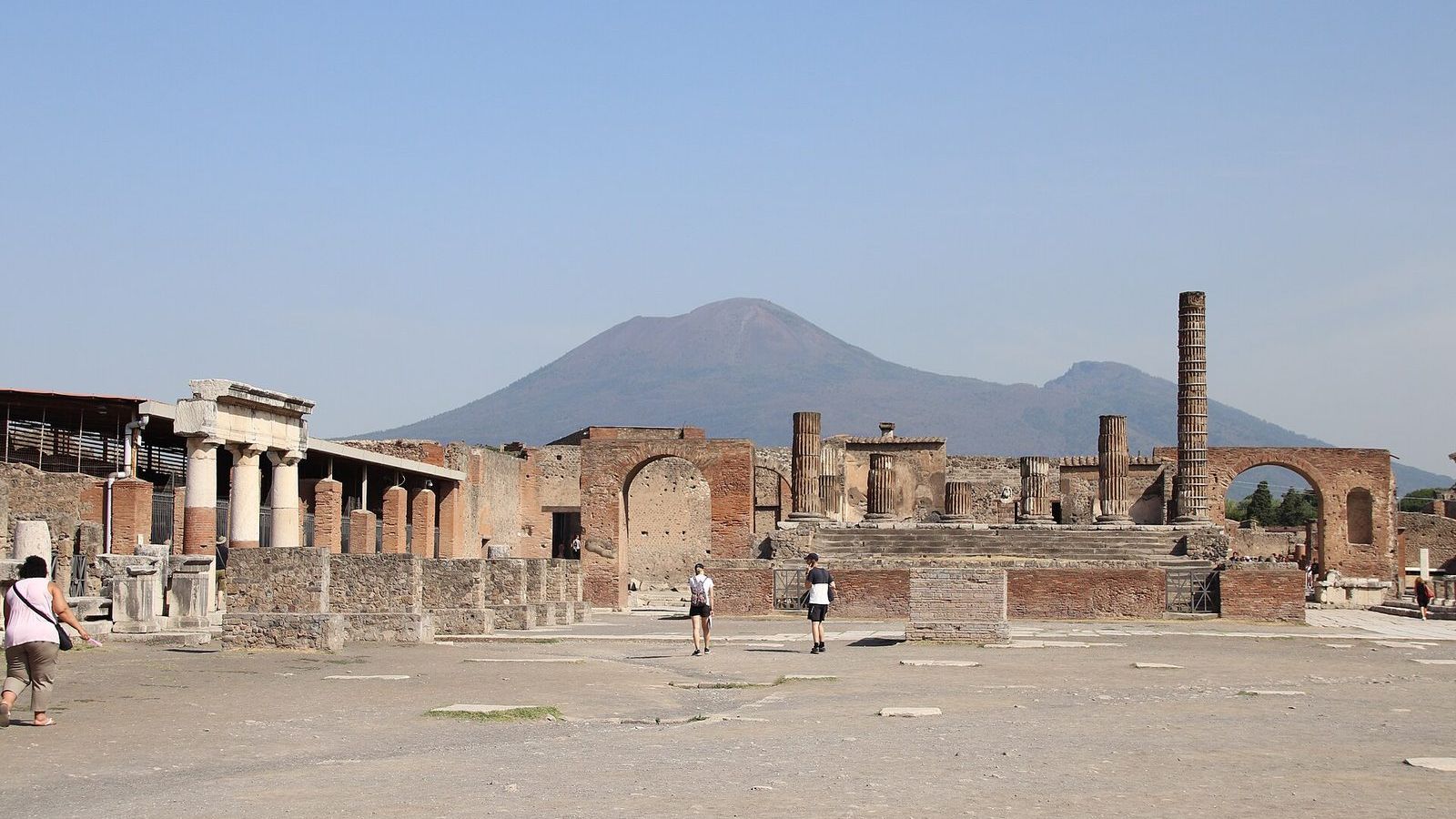
Around the year 106, the Roman senator Pliny the Younger wrote two letters to his friend the historian Tacitus, who had asked him for an account of the death of his uncle. The uncle was Pliny the Elder, the author of the Natural History and the commander of the Roman fleet at Misenum, at the northern tip of the Bay of Naples. He had died about twenty-five years earlier, in the eruption of Vesuvius that buried Pompeii and Herculaneum. The nephew, who was seventeen at the time, had stayed behind at Misenum and watched the eruption from about 30 km away. His two letters are the first eyewitness account of a great eruption that survives, and they are precise enough that a volcanologist can read a sequence of events out of them.
The first letter: the cloud and the uncle
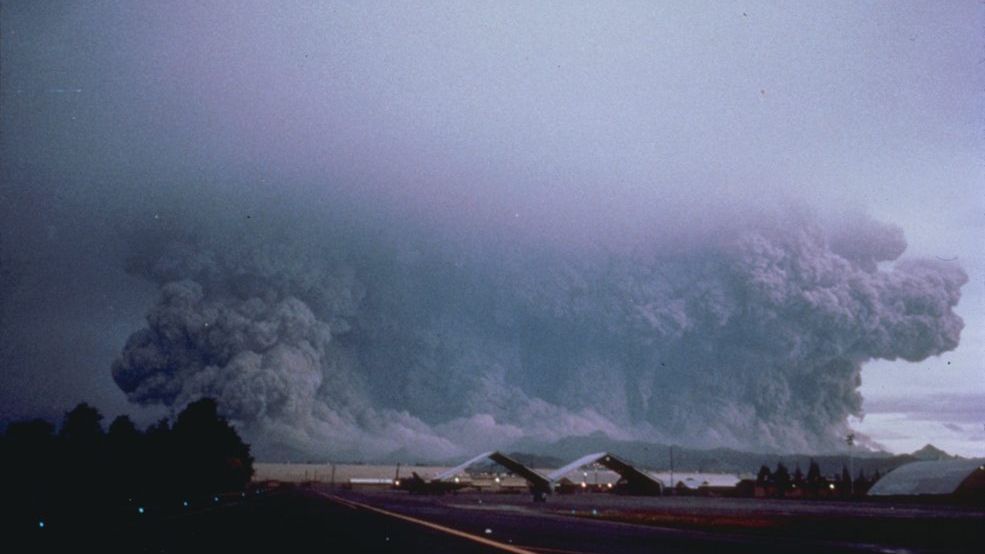
In the early afternoon of the first day, Pliny writes, his mother pointed out a cloud of unusual size and shape rising from a mountain that they could not at first identify as Vesuvius. Its shape, he says, was best described as an umbrella pine, the tree of the Italian coast with a tall bare trunk and a flat spreading crown: it rose to a great height on a kind of trunk and then spread out into branches, sometimes white, sometimes dirty and spotted according to how much earth and ash it carried.
That description is the eruption column. The trunk is the gas-thrust and convective region, in which hot gas and ash rise because they are lighter than the air around them. The crown is the umbrella cloud, which forms where the column reaches the height at which it is no longer lighter than the surrounding air and spreads sideways. The white and dirty patches are the pulses of the eruption, more or less ash in the mixture from minute to minute. A modern photograph of Pinatubo in 1991 shows exactly the shape he describes.
Pliny the Elder, a scholar as much as an admiral, ordered a boat to take him closer, then, when a message came from a friend trapped under the mountain, ordered the fleet's warships out to rescue people from the coast. The nephew records what the uncle noticed: ash falling on the ships, hotter and thicker the closer they came, then pumice stones and blackened, burnt stones, and the sea retreating from the shore. The ships could not land where they intended and ran to Stabiae, south of Pompeii, where the uncle dined and slept while the courtyard outside filled with pumice and ash to the point that the door would soon have been blocked. In the night the buildings shook with earthquakes. At dawn, which was still dark, the party went to the shore, where the sea was too rough to sail. The uncle lay down on a sail, asked twice for water, and died when a smell of sulfur drove the others to flee; he was found two days later, the nephew says, looking more asleep than dead. He was fifty-five, and the likely cause was his heart or his lungs rather than the heat.
The second letter: the night at Misenum
The second letter describes what the nephew and his mother lived through at Misenum. Through the night the earthquakes grew until the buildings seemed about to fall; at dawn the light was weak and the ground still shook, and they left the town with a crowd of people. They saw the sea sucked back from the shore and sea creatures stranded on the sand. Then, he writes, a black and dreadful cloud, broken by twisting flashes of fire, came down over the land and the sea, hiding Capri and the headland of Misenum, and a darkness came like that of a closed room with the lamp put out, he writes, rather than that of a moonless night. Ash fell thick and heavy and had to be shaken off repeatedly. Eventually the darkness thinned to smoke and fog, the sun came out pale as in an eclipse, and everything was covered in ash like snow.
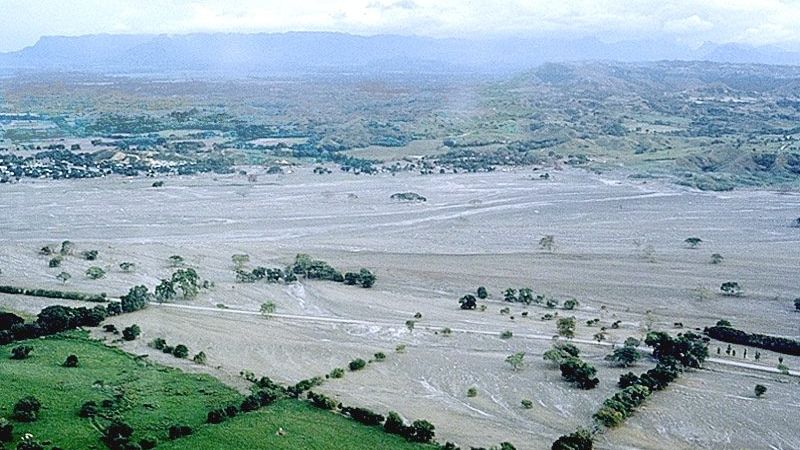
A volcanologist reads this as the second day of the eruption, when the column had become unstable and begun to collapse. When an eruption column collapses it feeds pyroclastic density currents, avalanches of hot gas and ash that run along the ground at 100 km/h and more, and the dark cloud that crossed the bay to Misenum was the dilute upper part of such a current, or its ash cloud, spreading far beyond the deadly dense part. Herculaneum, at the foot of the mountain, was destroyed by the first currents in the night; Pompeii, 10 km from the vent, by currents in the morning, after a night under about 2.8 m of fallen pumice. The retreat of the sea and the earthquakes record the ground shifting as the magma reservoir emptied. The darkness at noon is what an ash fall of a few millimetres per minute does to the daylight.
The eruption in numbers
Modern work on the deposits, led by Haraldur Sigurdsson and Steven Carey in the 1980s, turned Pliny's narrative into a timetable. The first phase, which began around midday, was a sustained column that dropped white pumice and then grey pumice over the land to the south-east for about eighteen hours; the change in colour marks a change in the magma, as the eruption tapped deeper into the reservoir. The column is estimated from the size of the pumice at a given distance to have reached about 26 to 32 km, with the higher values in the grey phase. In the early hours of the second day the column began to collapse, and at least six pyroclastic currents ran down the flanks, the later ones reaching Pompeii and beyond. The whole eruption lasted about a day and a half and erupted a few cubic kilometres of magma, which makes it a VEI 5, about the size of Mount St Helens in 1980 and far smaller than Pinatubo.
One calculation connects the letter to a formula, which connects the letter to a formula. The height of an eruption column depends on the rate at which magma leaves the vent, roughly as the fourth root of that rate, and the empirical fit the masterclass uses is H = 2.00 Q0.241, with H in kilometres and Q the eruption rate as dense rock in cubic metres per second. For the grey pumice phase the deposits give a mass eruption rate of about 108 kg/s. At a magma density of about 2,400 kg/m³ that is about 42,000 m³/s, and the formula gives 2.00 × 42,0000.241, which is about 26 km. The deposit says 26 to 32 km. A letter written in the year 106 and a fit published in 2009 describe the same column.
The date
The manuscripts of the letter give the date as the ninth day before the Kalends of September, which is 24 August, and that date stood for centuries. It has been questioned since the nineteenth century because the excavations keep turning up autumn: pomegranates and walnuts in the houses, wine already in sealed jars, people in heavier clothing, and the ash fall that Pliny describes lying to the south-east of the mountain, which fits the winds of autumn better than those of August. In 2018 excavators at Pompeii found a charcoal inscription on a wall that appears to be dated the sixteenth day before the Kalends of November, 17 October, of a year that is almost certainly 79. The manuscript tradition is not unanimous either, and several copies give other months. An autumn date, perhaps 24 October, is now favoured by most archaeologists, though the question is open, and the masterclass says so.
The style that took his name
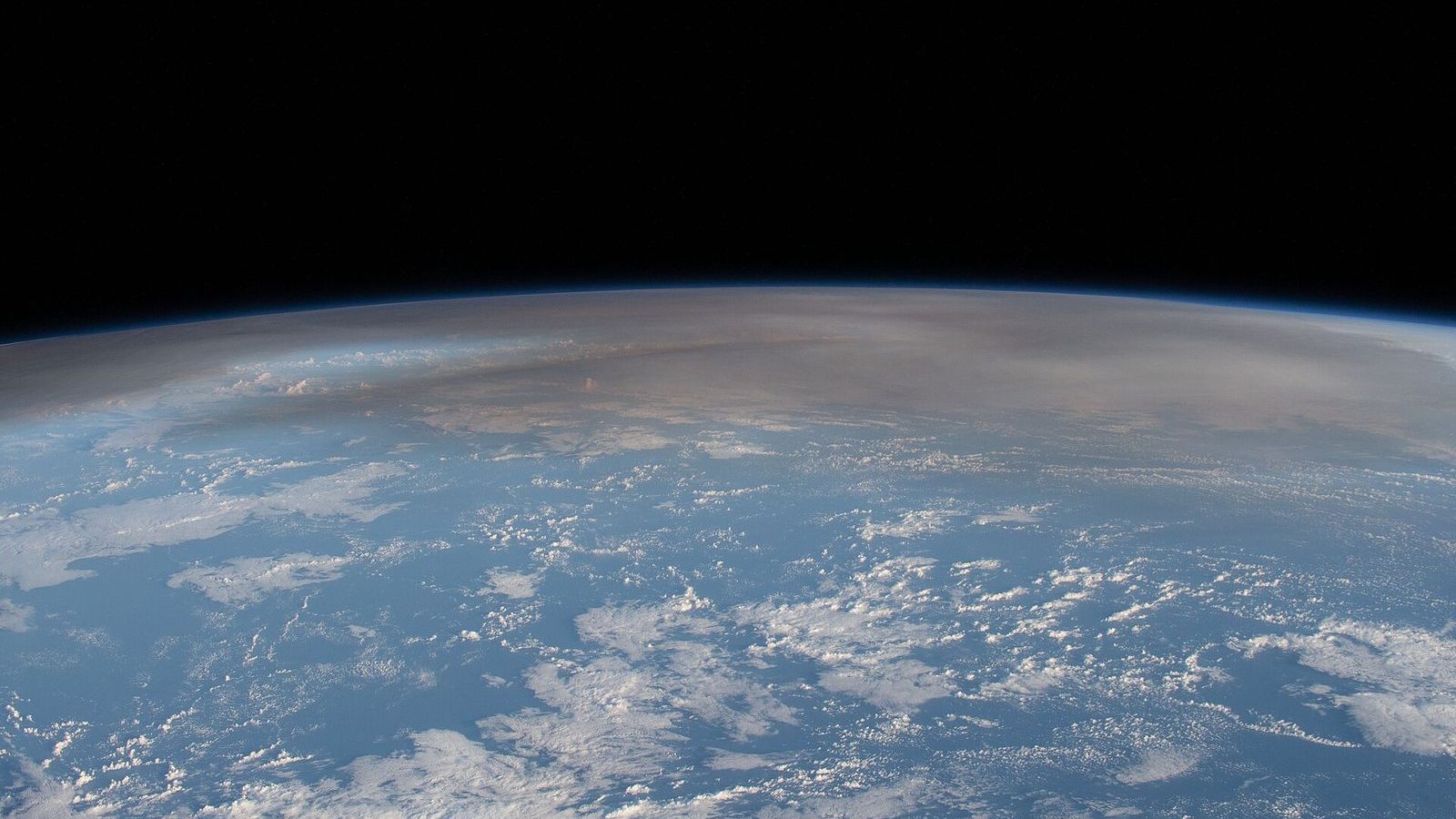
In 1973 George Walker classified explosive eruptions by how widely their deposits are spread and how finely the magma was fragmented, and the class of the largest sustained columns, with pumice carried for tens of kilometres, was named Plinian after the letters. A Plinian eruption is one with a tall, steady column, of the kind the seventeen-year-old described from Misenum, as opposed to the short bursts of a Strombolian or Vulcanian eruption. Pinatubo in 1991, Mount St Helens in 1980, and Vesuvius in 79 were all Plinian; the largest of the kind, with columns above 40 km, are sometimes called ultra-Plinian.
Both letters are short and are freely available in English translation, for example in the translation at attalus.org, as the two letters to Tacitus in Book VI. Unit 6 of the masterclass opens with the pine-shaped cloud and follows it through the physics of the eruption column, and Unit 11 returns to Herculaneum and Pompeii for what the pyroclastic currents did there.