 Image: US Geological Survey, public domain
How to become a volcanologist
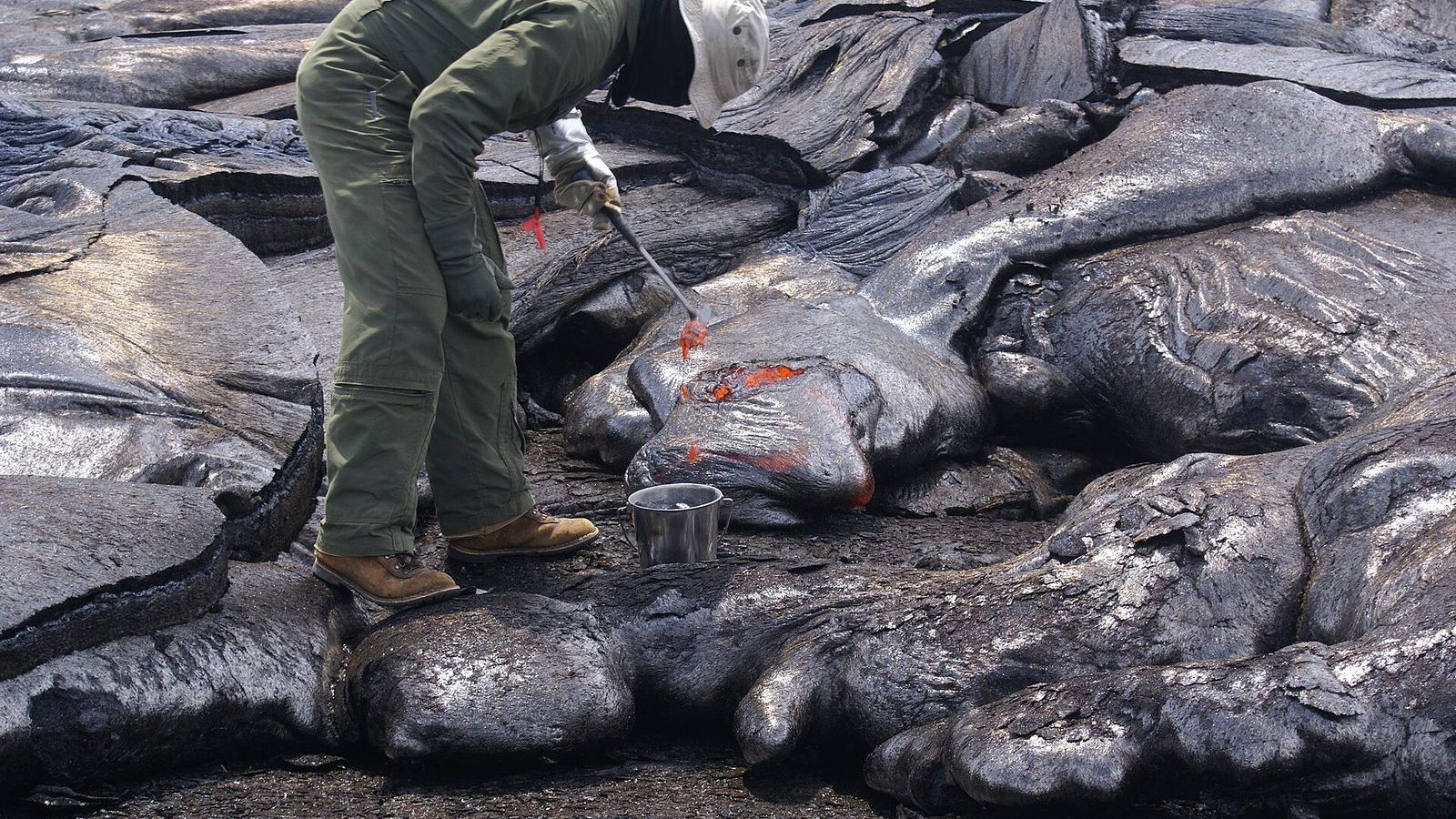
The volcanologist of the imagination stands at a crater rim in a silver suit, scooping lava into a bucket. A few do that, for a few days a year. The rest of the time the same person is at a desk processing satellite data, in a laboratory polishing a thin section, in a meeting with a civil protection agency, or writing a grant proposal. Volcanology is a small field, perhaps a few thousand people worldwide, and the route into it is a geology or Earth science degree followed by research training, with a great deal of mathematics, physics, and chemistry along the way. Here is what the job is, how people get it, and what to do now if you want it.
What volcanologists actually do
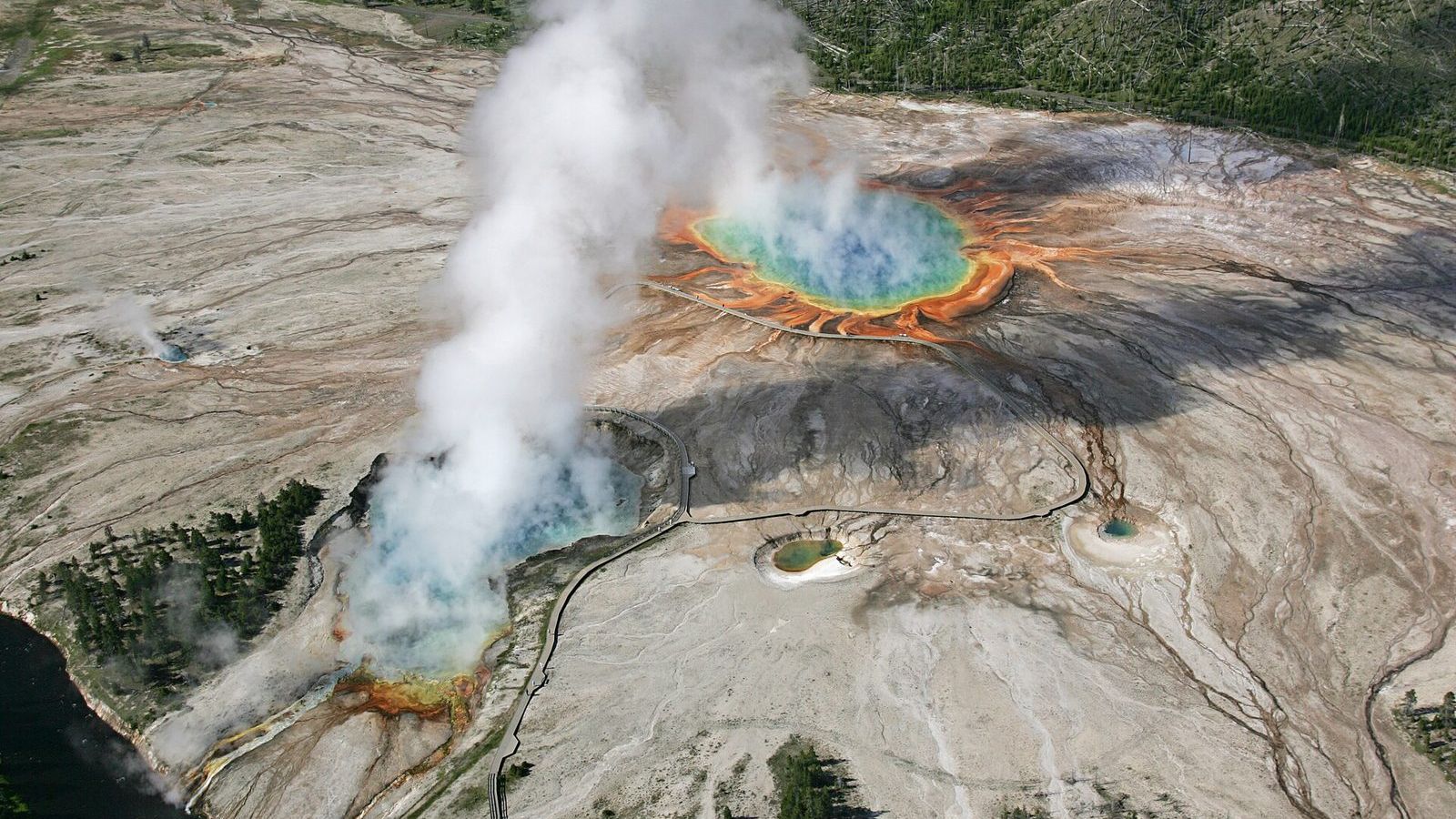
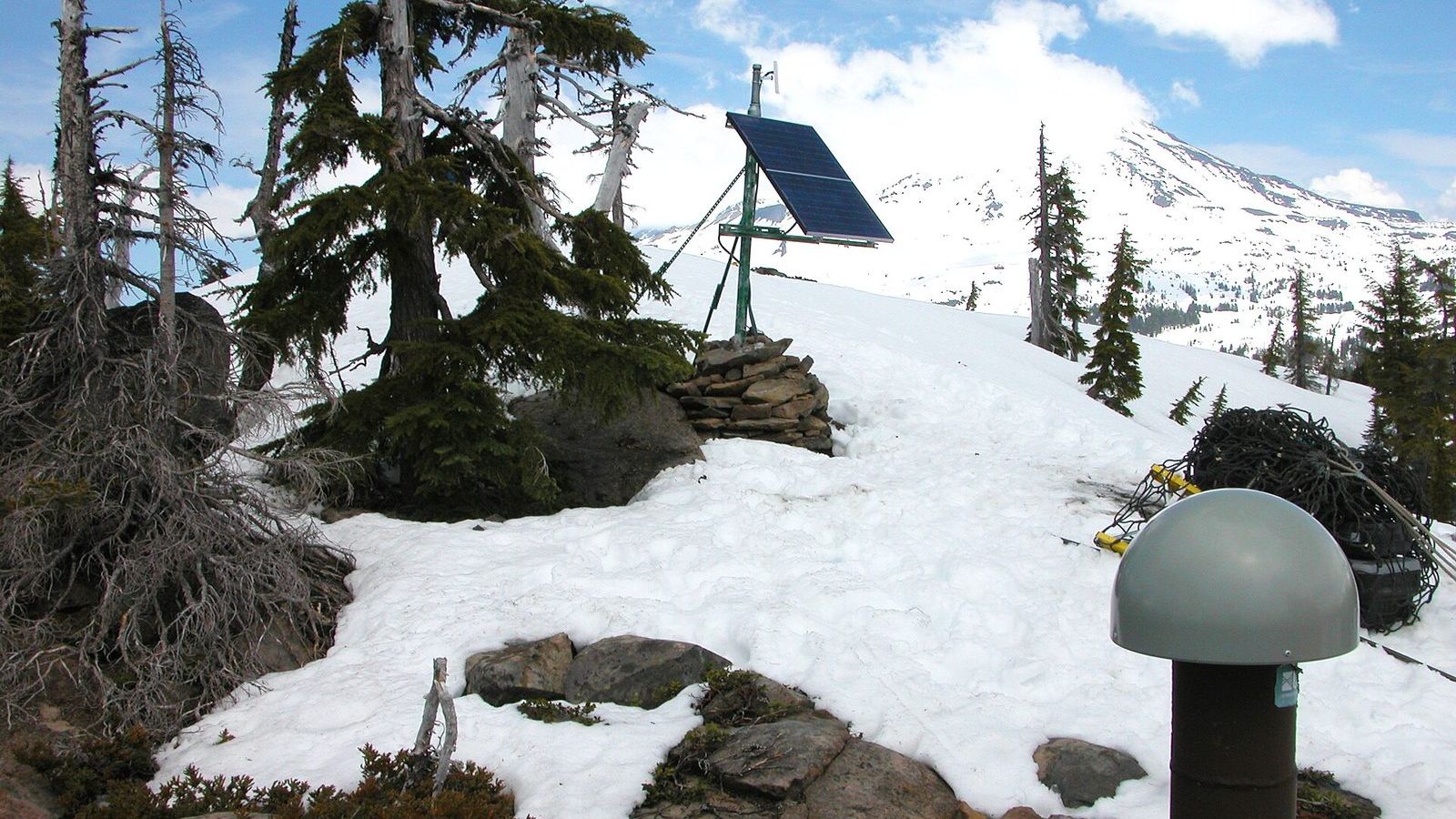
The work divides into six or seven kinds, and most volcanologists do two or three of them. The observatory scientist, at the Hawaiian, Cascades, Alaska, Yellowstone, or California volcano observatories of the US Geological Survey, at the observatories of the Istituto Nazionale di Geofisica e Vulcanologia in Naples, Catania, and Rome, at the Icelandic Meteorological Office, at PHIVOLCS in the Philippines, at GNS Science in New Zealand, at the Japan Meteorological Agency, or at the observatories of Costa Rica, Ecuador, Colombia, and Montserrat, watches the instruments of a volcano, writes the daily and weekly updates, and decides with colleagues when to raise an alert. The petrologist and the gas geochemist, usually at a university, read the crystals and the gases of a magma for its depth, temperature, and history. The geodesist and the seismologist work from satellite radar, GNSS, and seismic networks, often without ever visiting the volcano. The hazard and risk scientist makes the maps and talks to the people who must act on them. The physical volcanologist maps deposits in the field and reconstructs old eruptions. The modeller computes the spread of ash clouds and lava flows for aviation and emergency services. And the geothermal or mining geologist uses the same training in industry, which employs more geologists than volcanology ever will.
Field work is seasonal and shared. An observatory scientist might spend a few weeks a year on the volcano; a petrologist might spend a month collecting samples and eleven analysing them. The crater-rim moments are real, and they are rare.
School and university
At school the subjects that matter are physics, chemistry, and mathematics, with geography as the one that introduces the Earth. Geology itself is rarely taught before university, and nobody expects it. At university the usual degree is geology or Earth sciences, which includes field courses and a mapping dissertation that are the heart of the training; a degree in physics, chemistry, geography, or engineering with Earth science options is an equally good start for the geophysical and geochemical sides of the field, and some of the best volcano seismologists began as physicists.
The master's degree and the doctorate are the normal route into research and into observatories, which hire at doctoral level for their scientists. A doctorate in volcanology is three to five years of research on one problem, at a university with a volcanology group, and it is where most people decide which of the six kinds of volcanologist they are. The honest statement is that the field is small and competitive, that there are more doctorates than permanent positions, and that the skills transfer well: to geothermal energy, environmental consultancy, the insurance industry, remote sensing, and the data science of any kind.
The skills that get people hired
Research groups and observatories look for the same list. Field mapping and sampling, which the degree provides. A programming language, usually Python or MATLAB, which the degree may not, and which is worth learning early because every kind of volcanologist now processes data. Geographic information systems and remote sensing. Statistics, because forecasting is probability. Laboratory skills in geochemistry or petrography for the chemical side; instrument handling and basic electronics for the observatory side. Writing, because the output of science is papers and reports. The ability to explain a hazard to a mayor. And a second language where the volcanoes are: Spanish for the Andes and Central America, Indonesian, Italian, Japanese.
Field schools and summer schools
Several programmes take students, and they are the way to find out early whether the work suits you. The Center for the Study of Active Volcanoes at the University of Hawaiʻi at Hilo runs an international training programme in volcano monitoring for scientists from developing countries, on Kīlauea with the observatory. The Volcanic and Magmatic Studies Group of the Geological Society of London and the Mineralogical Society holds an annual meeting with a strong student presence and runs workshops. INGV and the Italian universities run summer schools and field courses on Etna, Stromboli, and Vesuvius. The Nordic Volcanological Center at the University of Iceland runs courses on the Icelandic volcanoes. The scientific assemblies of the International Association of Volcanology and Chemistry of the Earth's Interior, and its Cities on Volcanoes conferences, have student programmes and are where the field meets. The Geological Society of America and the American universities run field courses in the Cascades and Hawaiʻi, and the Earth Observatory of Singapore runs courses for South-East Asia. A student who writes to a research group or an observatory and offers to help with a field campaign is often taken up; the field needs hands.
Olympiads
For school students the International Earth Science Olympiad, first held in 2007, tests the Earth sciences including volcanism within its geosphere syllabus, and the national Earth science olympiads that select for it are a good first contact with the field. The units of this program cover the volcanology the olympiads ask for: why the mantle melts, the magma types, the plate settings, the eruption styles and their deposits, the landforms, and the hazards.
Safety and the people on the volcano
Volcanology has a safety culture because it has had to learn one. On 3 June 1991 a pyroclastic current from the dome of Unzen in Japan killed 43 people, among them the volcanologists Katia and Maurice Krafft and Harry Glicken. On 14 January 1993 an explosion at Galeras in Colombia killed six scientists who were in the crater during a conference field trip. Since then the field has worked out rules about exclusion zones, gas masks, the time spent in a crater, and the question of who decides, and a volcanologist today is trained to treat the volcano as a hazard first. The other half of the ethics is the people who live on the mountain, for whom the volcanologist's forecast is a decision about whether to leave home rather than an academic result, and a scientist who works at an observatory learns to speak to them as carefully as to a journal.
Where to read
The free tools of the field are the best introduction to its daily work: the Smithsonian's Global Volcanism Program for the catalogue, the volcano updates of the US Geological Survey for the observatories' own words, NASA's sulfur dioxide maps for the satellites. The careers pages of the International Association of Volcanology and Chemistry of the Earth's Interior, the Geological Society of London, the Geological Society of America, and the European Geosciences Union describe the routes in each region, and the Volcanic and Magmatic Studies Group's site lists the British groups and their meetings.
This program's own role is a modest one and worth stating plainly: it is a structured first survey of the field, with a certificate at the end, that builds the quantitative, observational, and reasoning habits a degree and an observatory both need, from the first unit's volcanologist's toolkit to the last unit's restless calderas. The longer version of this article, with the table of which units map onto which specialization, is the program's pathway page.