
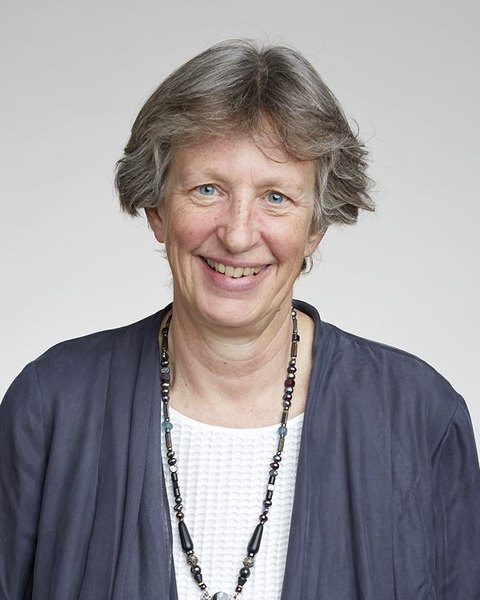
Photo: Duncan.Hull, CC BY-SA 4.0, Wikimedia Commons
Katharine V. Cashman
University of Bristol
- Research field
- Far-travelled volcanic ash and what it says about past eruptions
Katharine Cashman studies the ash that travels farthest from a volcano and the two stories it tells at once. Tephrochronologists find microscopic layers of ash in peat, lakes, and ice thousands of kilometres from the vent and use them as time markers; volcanologists need the same layers to know how large and how high past eruptions were. With Alison Rust she compared eyewitness accounts, mapped deposits, satellite images, and cryptotephra for the same eruptions and showed that 10 to 20 percent of an eruption's mass lands beyond the mapped deposit, that the ash seen in satellite images cannot account for it, and that the invisible far end of a deposit can still carry more than a thousand glass shards per cubic centimetre of sediment. The unit uses the paper in its section on tephra fall.
In the masterclass
The spotlight follows the section on far-travelled ash and tephrochronology.
The research is presented in Unit 6: Explosive Eruptions, in a research spotlight box that explains the result at the level of the unit and links it to what you have just learned.